
I don’t usually blog about nature quite as much as lately, but the post rain event changes are still a bit interesting. The plant consultant at the Olive Pink Botanic Garden tells me what is happening now could be a once in a lifetime event. I suppose that depends how long one’s lifetime is, of course. He also told me he is on chemo for ‘blood cancer’ at the moment, so perhaps he’s speaking for himself. What a treasure he is, traveling far and wide, sometimes thousands of kilometres in a week to view habitats and take samples.

He and I had a good ole chin-wag when I visited on Monday to research a tiny specimen I had photographed. I think we both would have enjoyed a longer visit but he had a plane to catch and an oncologist to see in Adelaide. God speed.


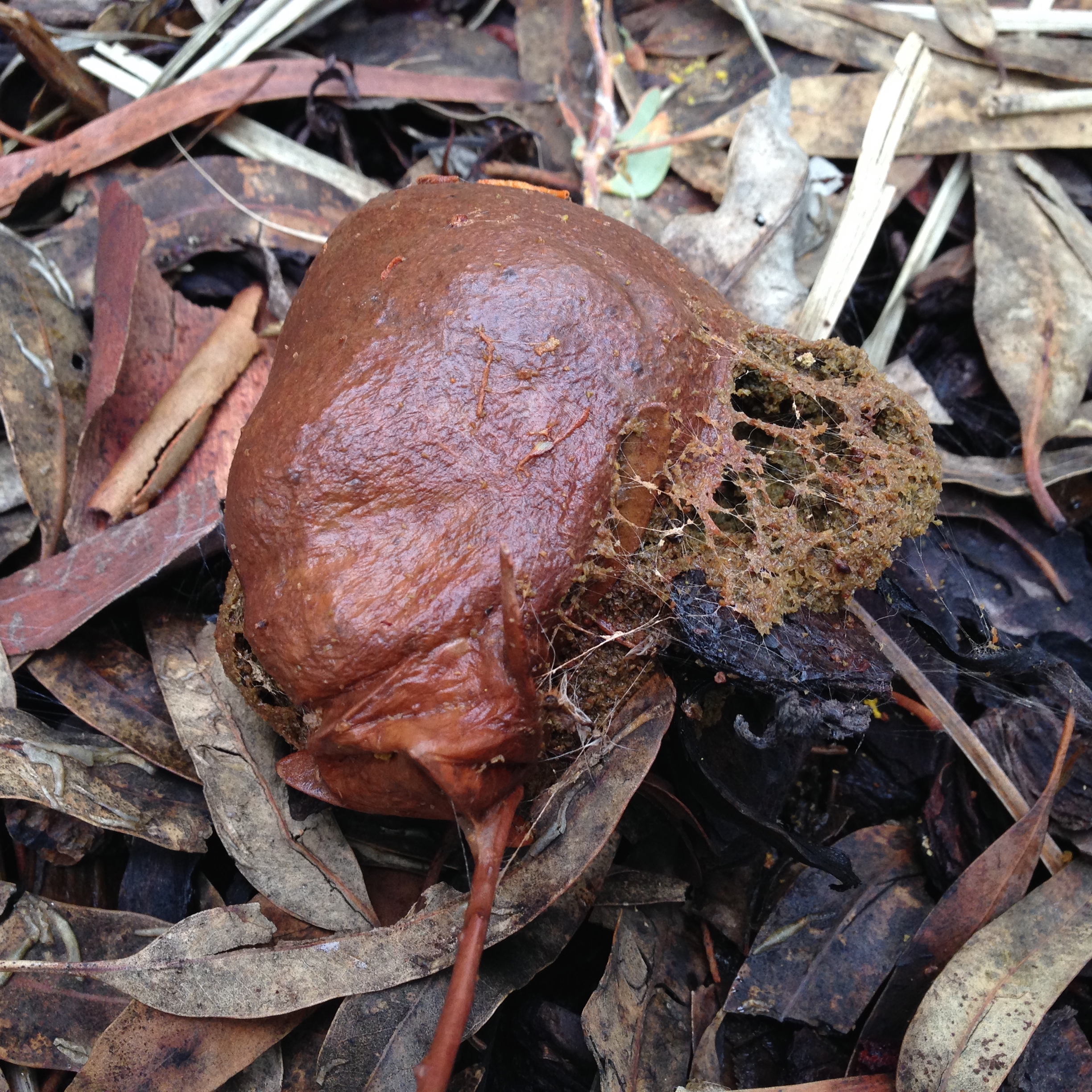
In our short conversation his enthusiasm for the land and its inhabitants was infectious. He told me that the nest I had seen the processionary caterpillars swarming from a couple of weeks ago, is used in bush medicine to treat burns. There is only one catch… you must use the outside of the nest, not the inside. The inside would have residue of the hairs from the caterpillars and would cause your burn to itch horribly. Can you imagine the poor sod that discovered that bit of information first hand??
As usual, I’ve digressed a bit. The tiny specimen I photographed and was researching turned out to be a type of lichen. It lies dormant in crevices of rocks until a ‘big wet’ comes. The rocks act as reservoirs, supporting some life for weeks and months after rains have ceased. Evidence of this fact is the sprouting of tiny ferns, moss, and lichens, surviving from the seepage of water. They are rarely seen in our part of the world.


Also, he showed me a steady trickle of a stream that had formed in some of the rock crevices, creating a small pool, in which tadpoles were rapidly maturing. What a treat!
That same morning and, at the other end of the spectrum, I came across this skull of a wallaby, half buried in the sand. Who knows if it might have survived had the rain come a few months earlier? But perhaps one of the dingoes I’ve seen around in the last few years would have got it anyway.
Three days after the photos of the tadpoles, I returned to the Botanic Gardens to find the water pool completely dried up! I was so sad, no little froggies to show you. Also, the lichen specimens he had showed me the same day were all gone. We had two very hot days, 42C (108F), and that dries things up pretty quickly. The miracle of it all is that somehow, enough reproduction has happened, very quickly, to ensure species survival.
But what I did see was this gorgeous young kangaroo, having an early morning rest. This is a wild kangaroo that comes in from the rocky outcrops that back onto the botanic garden.

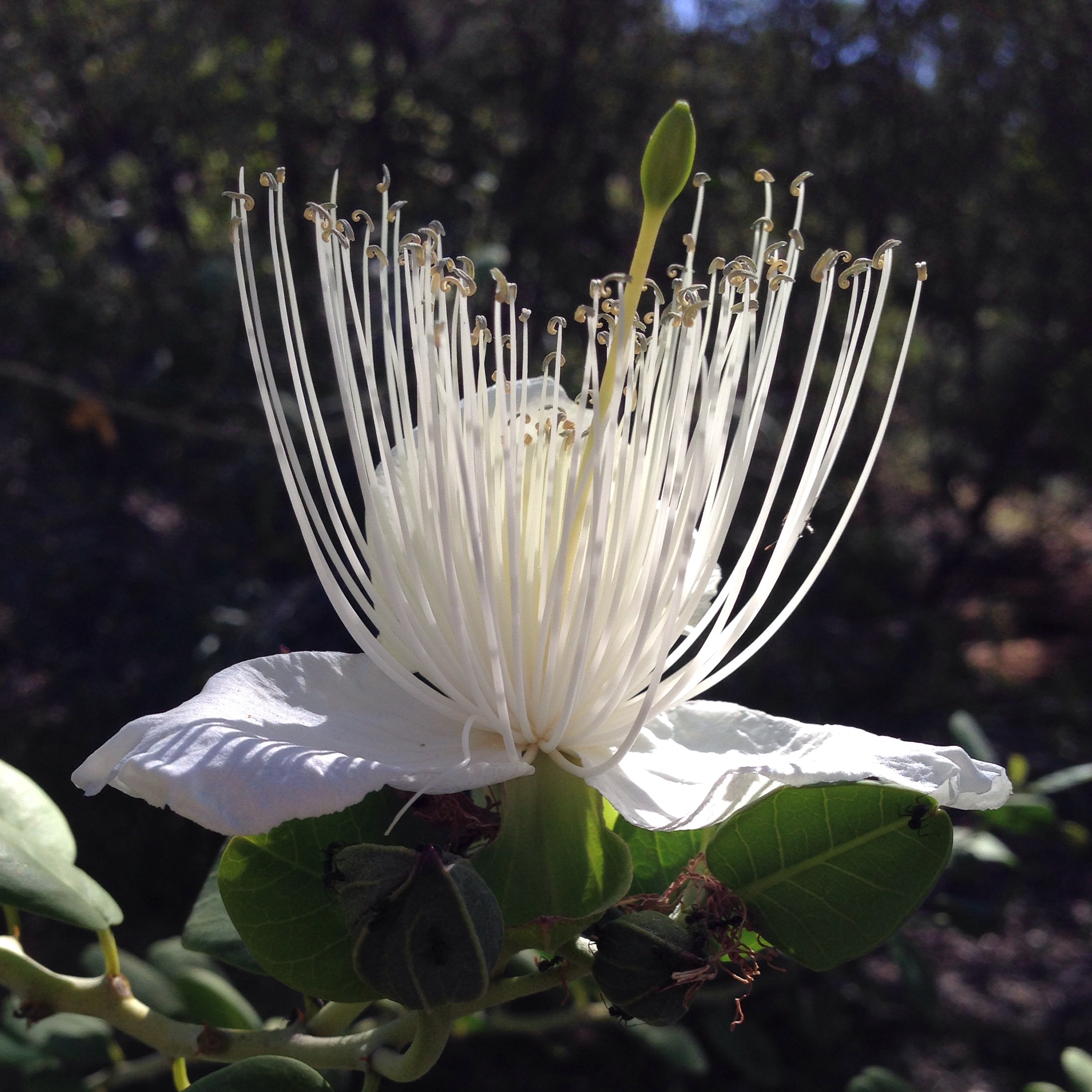
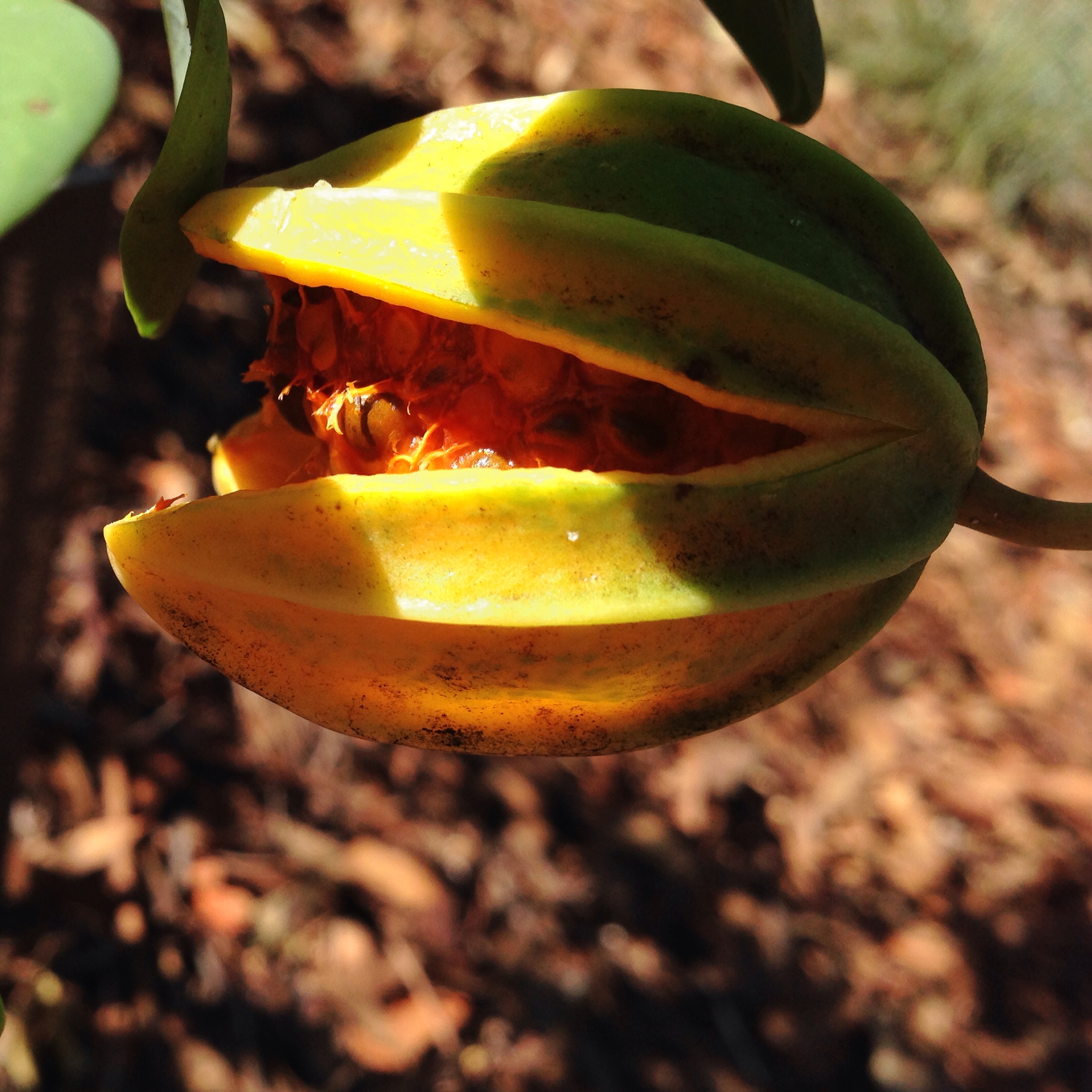
I also came upon a native species I had not seen in flower, or fruit, before. It would be the native version of a passionfruit. It is commonly called ‘caper bush’ but as you can see the insides of the fruit looks very much like the inside of a passionfruit. Apparently it is delicious but the birds and flowers usually beat the humans to it! The flower is very sweetly scented and beautiful and is large, about the size of a 10 yr old child’s fist, I would say. The fruits are about the size of walnuts, but slightly more elongated.

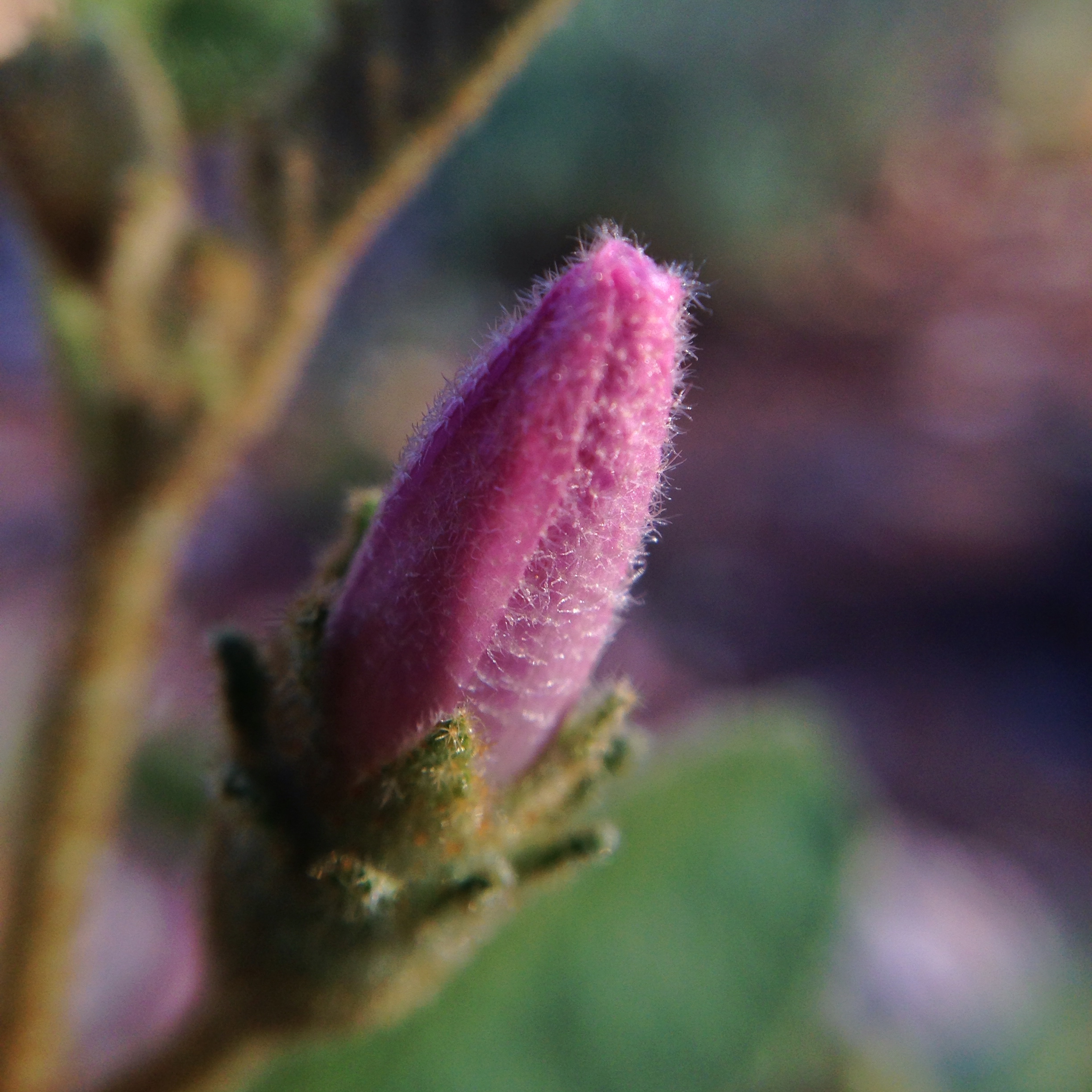

The wild flowers are starting to blossom, however, my walks will be severely curtailed from now on. As the grasses cover the ground it makes it hard to see snakes. And they will be in greater numbers since the things they eat are also in greater numbers! Also, my old nemesis, the prickles, are starting to take shape. We will explore other things, you and I, another chin-wag for another day.




 ardysez
Leave a reply to peakperspective Cancel reply