Twelve years ago I was treated for breast cancer and cured (yay). As you might expect it was a trying time in which I learned a lot. One of the things I learned is that I had the capacity to do good—even while I was being cared for by others. I also learned how to accept kindness and a helping hand when offered, though my tendency is to be self sufficient.
Fast forward twelve years, almost to the week, my dear husband had to go to Darwin, for radiotherapy for his own prostate cancer. We still have no resources here in Alice and it is still a thousand miles from where we live for this treatment. (I know some who read this blog are our old friends and some of you are new friends or aren’t friends at all, so excuse my repetition of details.) He went to the same medical accommodation to stay two nights and rode the bus to the treatment centre the same as I had done. These things are mostly a lonely journey with lots of time to think, write and rest as you can. Not always bad things. I was fortunate to have friends popping in and out of my daily treatment to drive me occasionally, to take me to lunch, to visit and to love me. But one particular friend whom I had known since my first day in Australia was also in palliative care for bone cancer caused by breast cancer five years previous. She was very brave but the irony was almost too much for me at times. I spent a lot of time alone and some of it frustrated.


The daily routine could be rather challenging. I wasn’t able to eat most of the food served in the accommodation. They didn’t cater for special diets and I couldn’t eat wheat and onion. There was a communal kitchen and refrigerator and I could get ingredients and prepare my own meals. This sounds easier than it was. The accommodation was about 95% indigenous, mostly very nice people but the ones who shared the kitchen were not quite on board with having to wash their own dishes and to not walk off while something was cooking. The kitchen filled with smoke sometimes as the cook went walkabout. I eventually washed my own dishes and took them back to my room so I wasn’t at the mercy of whoever last cooked and fled.
The daily bus trip that took us from the accommodation to the treatment centre, about half an hour away, was a two hour route, picking up for cancer treatment and dropping off others for kidney dialysis and return to accommodations as well. The bus was a little white mini-bus, ubiquitous around the world! It was unmarked and the pickup spot differed from the drop-off point, and was also unmarked. There were several such buses coming and going and I was clueless which one was to take me back to the accommodation. Often the drivers were clueless as well. In the heat and humidity of Darwin, waiting sometimes an hour or longer for the right bus to come along was challenging for me. I was lucky, most of the effects of radiation treatment were on my skin, but also I found it made me tired, so waiting outside the hospital for transport, among the smokers and the various other strangely behaved humanity was a daily education.

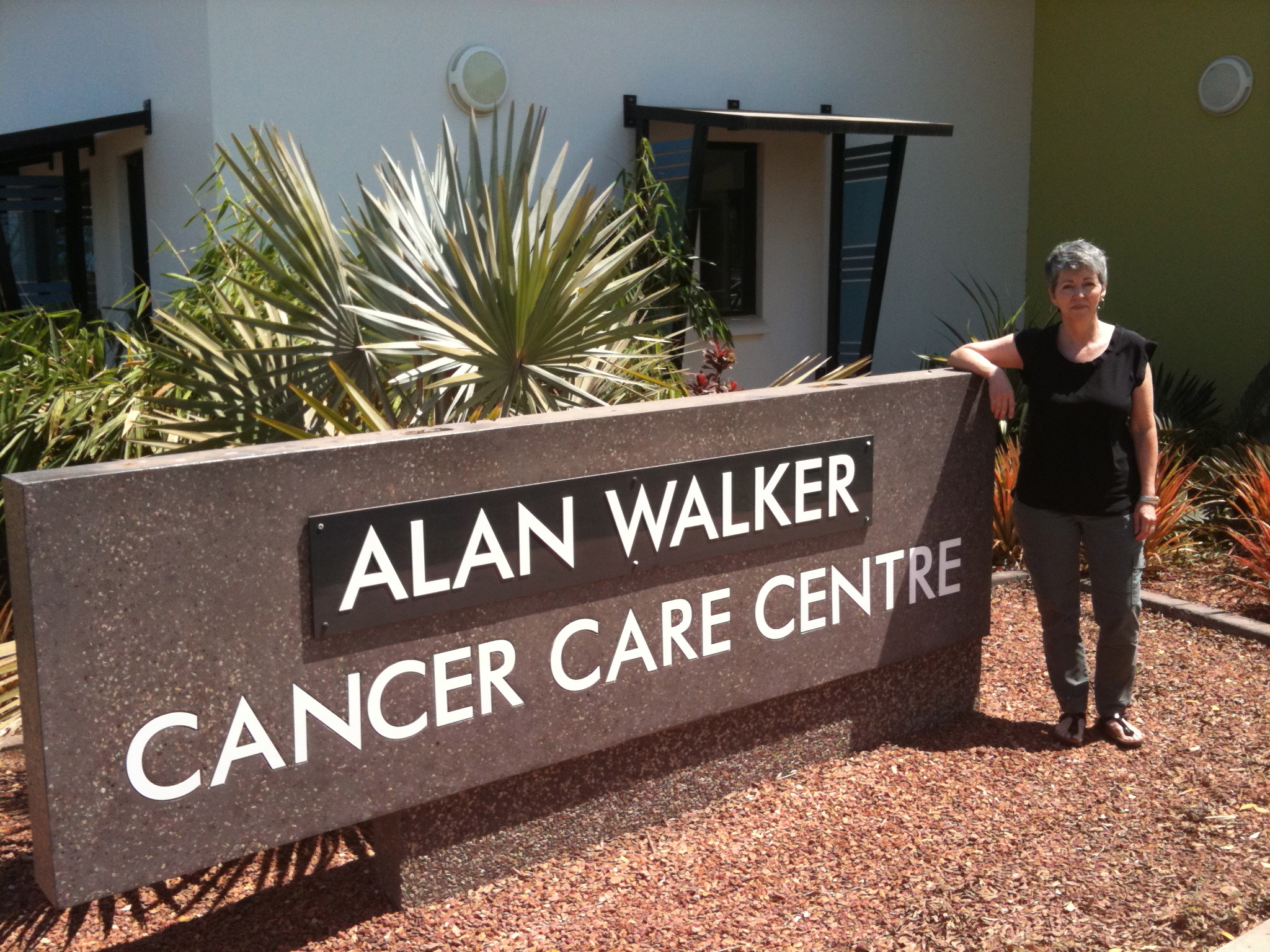

At the end of the fourth week of regular treatment a conversation ensued with two of the radiologists. They knew I was transported daily by ‘the bus service’ and they asked me how everything had worked. (The centre had not been opened long when my treatment began in August of 2011.) I responded honestly telling them of the trials I’d experienced. To say the least they were shocked. After I finished my treatment I went to the cubicle provided to change from the hospital gown back into my own clothes. When I came out I had another little checkup and then as I was leaving the centre a man approached me and asked if I was Ardys and if I had a minute to talk to him. It turned out he was the operations manager, or something similar, and he wanted to ask me more about the conversation I’d had with the radiologist, specifically the bus transport. After I told him my experience he asked if I could write him a letter explaining what I had just told him. As it happened I could. And did. I’d been keeping a diary. Below is an excerpt of that letter:
“I have been told it was ‘unfortunate’ I was caught in a situation of changeover from one bus service (Mission Australia) to another. But truly, this has been so badly managed it defies description. Below is a list of the major issues, as I have experienced it.
- Unmarked buses
- Drivers who have no advanced idea of their schedule
- Schedules that are subject to immediate change by mobile phone call
- Pickups at places (repeatedly) where there is no person waiting
- No marked pickup outside RDH (Royal Darwin Hospital)
- No notification of a ‘transit lounge’ to new passengers
- Buses leaving early or late for pickups “
But here is the point of this story—for a lot of things we do in life, good and bad, we never know the outcome. I never knew if my input had helped, though the operations manager assured me it had…until Don returned from his stay a week ago. I showed him the full letter and he told me, every single thing on the list has been rectified. That is what I call a full circle moment of the best kind. Who would have guessed my efforts and experience would come back to help the man I love through his own experience? I often wonder about my life’s purpose. And this is a reminder. Just do my best. Stay engaged. Be vulnerable enough to learn. And be patient. It’s harder than it sounds some days, but the outcomes are unimaginable.




 ardysez
Leave a reply to daleleelife101.blog Cancel reply